A seller on Monument Avenue called last month with a straightforward question. She had budgeted for new windows, a repainted front door, and a discreet rear addition before listing in the fall. Her contractor was ready. Her stager had a date. What she did not know was that her block sits inside the proposed boundary of Charlestown's first local historic district, and that the exterior scope she had priced out could, within the next year, require a Certificate of Design Approval before a permit is issued.
That is the kind of friction that does not appear on a portal price history. It is also the single most useful thing a Charlestown seller can understand right now, because it changes both the sequence and the scope of pre-listing work.
The Regulatory Clock Most Sellers Have Not Started
Charlestown has never had a local historic district. That is about to change. On July 26, 2022, the Boston Landmarks Commission accepted for further study a petition submitted by registered voters to designate the Monument Square Landmark District in Charlestown, and the Study Committee for the Monument Square Landmark District held its first meeting on April 1, 2025, and has been meeting regularly, both in person and virtually, to review the petition, evaluate the proposed boundary, and draft potential standards for the district. In 2025, staff at the Landmarks Commission also started the process to designate Monument Square as Charlestown's first protected historic district.
The process is deliberate. A Study Committee guided by Chapter 772 of Massachusetts General Laws recommends whether to establish a district and identifies character-defining features that should be subject to preservation reviews, drafts a report through a series of public meetings, and after the draft study report is posted for public review, written comments are collected for 60 days. After that, the Boston Landmarks Commission takes a roll call vote at a second public hearing, the measure goes to the Mayor for 15 days, then to the City Council for 30 days.
The Study Committee is also weighing something quieter that matters more to sellers outside the core boundary. A "protection area" would surround the district and provide light oversight focused on preventing demolitions, landscape or topography changes, or major height/massing increases that could compromise the core historic district. If you own a rowhouse a block off the Square, your exterior may still be touched by this.
Owners who want to see where the boundary is being drawn can review the materials in person. All materials, agendas, approved minutes, presentations, and meeting recordings are available at boston.gov/monumentsquare, and physical binders of all documents can also be reviewed at the Charlestown Branch Library.
What Actually Falls Under Review
The scope is narrower than most sellers assume, which is both good and bad news. The Boston Landmarks Commission, and its respective historic district commissions, review "proposed changes to design, materials, or appearance of the exterior." Interiors are generally left alone. Exteriors are where sellers spend their pre-listing money.
Once a district is active, the sequence looks like this: consult the district's specific design standards, finalize the design, file an application, and Landmarks Commission staff will determine whether the project is exempt from review; if not exempt, the owner may need to attend a public hearing before the applicable historic district commission to obtain approval, after which the property owner receives a Certificate of Design Approval.
Exterior work most likely to catch a Charlestown seller off guard:
- Window replacement, especially vinyl or non-divided-light glass
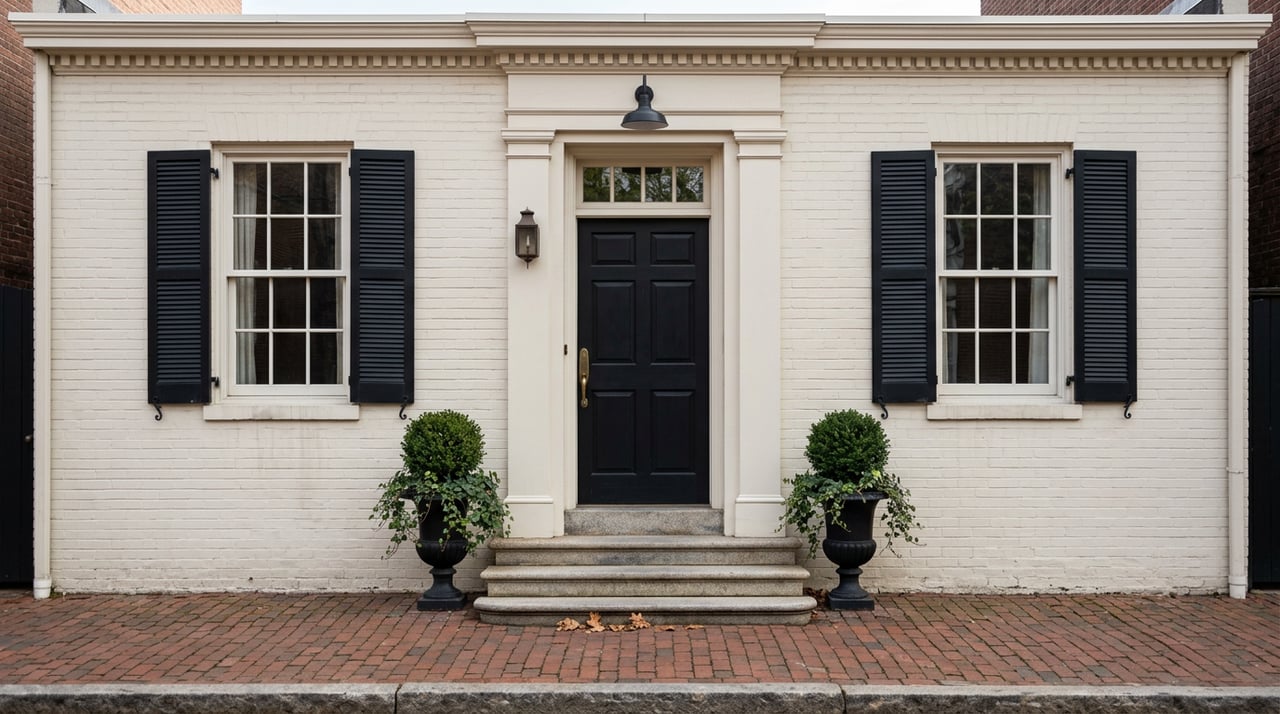
- Front door replacement or repainting in a non-approved color
- Shutters, storm doors, and light fixtures
- Roof material changes visible from the street
- Rear additions where any portion reads from a public way
- Fencing, gates, and hardscape at the sidewalk edge
The practical implication: if you are within, or adjacent to, the proposed Monument Square boundary and you were planning cosmetic exterior refresh work this year, do it now under current rules or design it to the standards being drafted. Waiting six months could mean a hearing, a revision cycle, and a listing date pushed to the following spring.
The Market You Are Pricing Into Is Two Markets
Charlestown in 2026 is not one story. It is at least four, and pricing strategy diverges sharply across them.
| Segment | 2026 YTD Avg Sale | Sale-to-List | Days to Offer | Months of Supply |
|---|---|---|---|---|
| Condos | $1.04M | 101.3% | 20 | 2.4 |
| Single-family | $1.97M | 101.7% | 19 | 3.8 |
Those numbers come from MLS reporting that shows Charlestown's 2026 market splits cleanly along property-type lines, with the average condo sale closing at $1.04M across 62 closed sales year-to-date versus $1.01M a year earlier, and single-family homes averaging $1.97M across 11 closed sales year-to-date versus $1.77M a year earlier. Condos are moving in a 2.4 months of supply seller's market, with condos sold at an average of 101.3% of list price across 62 closed sales year-to-date, averaging 20 days to offer. Single-families sit in a slightly deeper inventory pocket at 3.8 months of supply, with homes sold at an average of 101.7% of list price across 11 closed sales year-to-date, averaging 19 days to offer.
The bifurcation cuts a second way, by price band. While mid-market condos are moving fast, the ultra-luxury segment above $3M currently faces an inventory surplus, leading to slower sales velocity in that tier, even as Charlestown remains a high-value alternative to the Seaport and Back Bay, offering a lower average price-per-square-foot around $835 to $883.
Zoom out to the citywide April 2026 picture and the same split appears in sharper relief. The citywide median sale price sat at $775,000 remaining basically flat to slightly down year-over-year, inventory supply reached 2.1 months, days on market ran to 42 median, the sale-to-list ratio was 98.7% with the typical condo selling for roughly 1.1% under asking price, and yet 39.4% of units still triggered bidding wars and sold over asking.
Read those two datasets together and the takeaway is not "Charlestown is hot." It is that well-prepared, correctly-priced Charlestown listings under roughly $2M are outperforming the citywide average by a wide margin, while listings above $3M are competing against a slower luxury market with more forgiving buyers.
A Charlestown seller pricing off the neighborhood median without knowing which of the four buckets their home lands in is negotiating against themselves before an offer arrives.
How The Split Changes Pre-Listing Choices
Two rules follow from the data.
For condos and single-families under roughly $2M, speed and presentation compound. At 101%+ list-to-sale and sub-three-week offer windows, the return on staging, professional photography, and small exterior refresh work is real. This is the segment where a Monument Square review delay hurts most, because you are trading a hot window for a slow one. If you are inside the proposed boundary, decide the exterior scope now, permit under current rules, and keep the pre-listing timeline intact.
For single-families and condos above $3M, the calculation flips. With slower velocity and a softer luxury tier, over-improving before listing rarely pays back. Buyers at that level want either turn-key or blank slate, and they are increasingly willing to wait. Here the historic review conversation is different: leaning into original materials, restored windows, and preservation-consistent detailing tends to appeal to the buyer pool that shops Charlestown specifically for its character.
There is also a supply-side signal worth watching. The "Lock-In" Effect Is Thawing: more sellers are listing their homes due to unavoidable life events, causing new statewide condo listings to jump 14.3% year-over-year in April. More competition is coming. Sellers who list into a still-tight Charlestown inventory this year are pricing against a different comp set than sellers who wait until 2027.
Timing Signals To Watch
Three dates that should shape a Charlestown seller's calendar:
- The Monument Square boundary vote. Once the Study Committee's final report is posted, the 60-day comment window and subsequent Commission vote set the clock. Exterior work permitted before designation is grandfathered under existing rules.
- Fall 2027 school reconfiguration. A key driver is the Tobin School's planned reconfiguration to a PreK–6 model by Fall 2027, an update that is influencing demand by streamlining the elementary experience and adding clarity for families planning longer-term. Family-buyer demand is likely to concentrate in listing windows that line up with that transition.
- Flatley Mystic Banks construction start. Major mixed-use projects like the Flatley Mystic Banks development are slated to begin construction in 2026, though completions for these larger projects are years away. Near-term construction impact matters for staging photography and open-house routing on affected blocks; long-term supply impact is a 2028-plus story.
FAQ
Does the proposed historic district affect interior renovations? Generally no. Exterior alterations visible from a public way are the reviewable scope. Kitchens, baths, and interior floor plan changes are handled through the standard Inspectional Services Department permitting process.
If I am outside the core Monument Square boundary, am I clear? Not necessarily. The Study Committee is weighing a protection area that would apply lighter oversight to demolitions, topography changes, and large massing increases in the blocks surrounding the district. Confirm your address against the current draft boundary.
Should I disclose that my property sits inside the proposed district? This is a conversation to have with your attorney. As a practical matter, buyers doing thorough diligence will find the public record. Getting ahead of the question, with a clear file showing what has been permitted and when, tends to shorten negotiations rather than lengthen them.
Selling in Charlestown in 2026 rewards sellers who understand which of the four market buckets they are in, and who make their exterior decisions before the regulatory window narrows. If you own inside or near the proposed Monument Square boundary and are considering a 2026 or 2027 sale, Kim Covino & Co can walk your block, review your pre-listing scope against current permit rules, and build a pricing strategy that reflects your specific segment. Request a complimentary home strategy to get started.