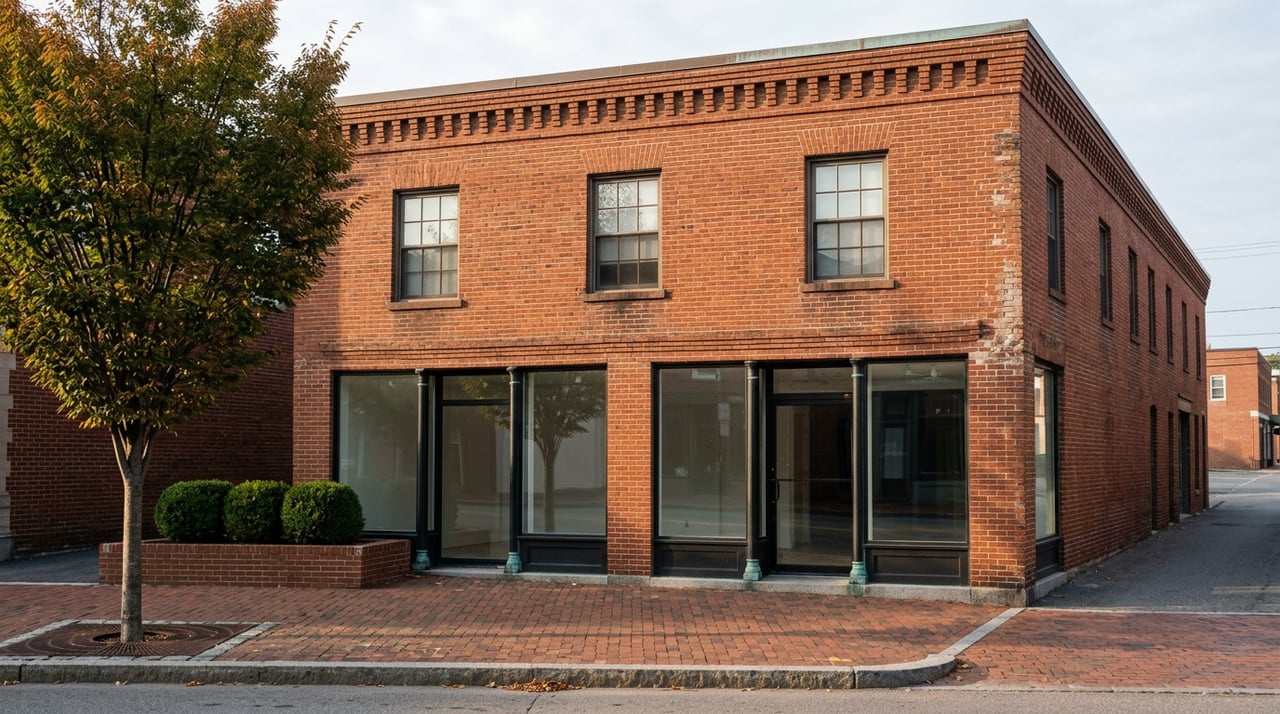
On the morning of August 25, 2025, a small crowd gathered at 164 Essex Street in Melrose for a groundbreaking. Szecon Development was breaking ground on Cedar Park One64, an 80-unit mixed-income rental building a short walk from the Melrose/Cedar Park commuter rail stop. City officials were there. So was a representative from MassHousing, which is helping finance the project, and the architecture and construction teams who will build it. It was the kind of quiet civic ceremony that rarely makes it past the local paper.
It should matter more to anyone comparing Melrose to its neighbors right now, because that single address tells you almost everything about how this city is actually implementing the state's MBTA Communities Act, and where the pressure from that law is landing versus where it isn't.
The law required one district. Melrose used four, and still concentrated everything near the tracks
Massachusetts' MBTA Communities Act requires cities and towns served by transit to allow multifamily housing by right somewhere within a half mile of a station. Melrose, classified by the state as a "Commuter Rail" community, met that requirement using four zoning tools it already had on the books: the Rail Corridor Overlay District, the Smart Growth Overlay District, the Urban Residential-D District, and the Medical Business District.
That alone would be an unremarkable compliance story. What makes Melrose different is how it scored in a January 2026 report from Boston Indicators, the research arm of the Boston Foundation. Author Amy Dain grouped municipalities into tiers based on how far they went past the law's minimum. Most towns landed in what she called an incremental category: technically compliant, but not built for real change. Melrose was placed in the smaller "above and beyond" tier, alongside Lexington, Lowell, and Somerville, communities that zoned more land at higher density than the state required.
On paper, that sounds like a city opening itself up broadly to new housing. In practice, the building permits tell a narrower story.
Four projects, three stops, one structural reason
As of September 2025, four residential developments were moving forward in Melrose as a direct result of the new zoning, and every one of them sits at one of the city's three commuter rail stops on the Haverhill Line.
| Commuter Rail Stop | Project | Units |
|---|---|---|
| Melrose/Cedar Park | Two developments, including Cedar Park One64 at 164 Essex Street | 134 |
| Melrose Highlands | One building adjacent to the station | 36 |
| Wyoming Hill | Approved four-story building at 31-39 West Wyoming Avenue | 27 |
That's 197 units, all within easy walking distance of a train platform, and none of it is an accident of where developers happened to find cheap land. It's baked into the statute. Section 3A of the state's Zoning Act requires that a compliant multifamily district sit no more than half a mile from a station. Melrose could not have satisfied the law by upzoning, say, the East Side near the Middlesex Fells Reservation, even if it had wanted to. That neighborhood simply falls outside the radius the law recognizes.
This is worth sitting with, because the statewide picture looks different. The same Boston Indicators report found that across the roughly 7,000 units now in the pipeline in 34 Massachusetts communities, only about 30 percent sit within a half mile of an actual train station. Many towns satisfied the law by rezoning industrial parks, office corridors, or retail strips well outside their village centers, anywhere but near an existing single-family neighborhood. Melrose didn't do that. Its density, modest as it is in raw unit count, actually sits where the law intended it to sit. That's a genuinely unusual outcome, and it means the zoning story here is legible in a way it isn't in most of the towns making headlines.
Why the city wanted this particular building
There's a second layer to Cedar Park One64 that matters if you're trying to understand Melrose's incentives rather than just its zoning map. The project is being built under Chapter 40B, the state's affordable housing statute, and it's being counted toward Melrose's progress toward what's known as Safe Harbor status. Communities that get enough of their housing stock classified as affordable gain more local control over future 40B proposals, the kind that can otherwise override local zoning outright. In other words, the city isn't just checking a box for the MBTA Communities Act. It's using the same project to buy itself more say over what gets built next.
That's the sort of incentive structure that doesn't show up in a zoning map. It shows up when you ask why a city welcomed a specific 80-unit building at a specific address instead of treating compliance as a formality.
What this does to the rest of the market
Here's where it gets useful for anyone actually shopping in Melrose. The city's median sale price sat at $960,000 in January 2026, up 14.1 percent year over year, with homes averaging three offers and selling in about 15 days, according to that month's data. That single number flattens two very different stories underneath it.
Melrose Highlands, home to one of the three MBTA-zoned stops, had a median sale price of $950,000 as of October 2025, up 14.5 percent from the year before. That's roughly in line with the city as a whole, which makes sense: this is one of the neighborhoods absorbing new supply.
The East Side, which sits outside the half-mile radius and was never eligible to host the new multifamily zoning no matter how ambitious Melrose's compliance effort got, had a median sale price of $1.2 million in October 2025, up 37.6 percent year over year. Downtown Melrose showed an even sharper jump in August 2025, up 47.3 percent year over year, though that figure is based on just 12 sales and should be read as a small, noisy sample rather than a stable trend.
The pattern is consistent even where the sample sizes are thin: the parts of Melrose that structurally cannot receive new multifamily construction are the parts appreciating fastest. That's not a coincidence produced by good schools or good luck. It's the predictable result of a law that concentrates new supply at three specific points and leaves everything else exactly as constrained as it was before.
What to actually do with this if you're comparing Melrose to another town
If you're weighing Melrose against Lexington, Melrose against Woburn, or Melrose against a town that complied with the bare minimum, the zoning headline isn't useful on its own. What matters is where you're looking to buy relative to those three stops.
- If you want exposure to more inventory over time, including new construction and multifamily options, look at parcels within walking distance of Melrose/Cedar Park, Melrose Highlands, or Wyoming Hill. That's where the pipeline is, and where it will keep being, since the law's half-mile boundary isn't going to move.
- If you're buying a single-family home for the long term and want to understand why competition in certain pockets feels disproportionate to the town's overall reputation, look at how far the property sits from those same three stops. The East Side's price growth isn't happening despite the zoning change. It's arguably happening partly because of it, since that stock is legally shielded from the kind of supply response that could soften demand elsewhere.
- If you're an investor evaluating a multifamily purchase or a small development site, the addresses already in motion (164 Essex Street, the parcel near Melrose Highlands, and 31-39 West Wyoming Avenue) are the closest thing Melrose has to a track record for what gets approved and financed under the current rules.
You can browse what's currently listed across these pockets on our Melrose homes for sale page, or get a fuller picture of the city's neighborhoods on our Melrose guide.
FAQ
Does this zoning change affect my existing single-family home's zoning? No. The MBTA Communities Act only requires a city to designate at least one qualifying multifamily district. It does not rezone existing single-family neighborhoods outside that district, and in Melrose's case, the qualifying areas are tied to the half-mile radius around its three commuter rail stops.
Is Melrose required to build more housing, or just allow it? Just allow it. The law requires zoning that permits multifamily housing by right within the qualifying district. It does not mandate construction, which is why the four projects currently underway are a market response to the zoning change rather than a government requirement.
Where can I see the official district boundaries? The City of Melrose publishes its compliance details, including which existing districts it used to meet the requirement, on its municipal MBTA Communities Law page.
Zoning maps and permitting pipelines only tell you part of the story. The rest comes from knowing which blocks are actually transacting, what they're selling for, and why. If you're weighing a purchase near one of these station areas, or trying to price a home on the side of Melrose that isn't going to see new supply anytime soon, Kim Covino & Co can walk through what the data means for your specific address. Request a complimentary home strategy and we'll bring the comparables that actually apply to your corner of the city.