Wakefield hosted two different kinds of tests this year, and both of them ran through the same three blocks of North Avenue. One was loud, scheduled a year in advance, and drew crowds. The other has been running quietly since January, rent-subsidized, and its answer arrives this month whether anyone notices or not.
The loud one was Porchfest, and by now most of Wakefield has an opinion on how this year's edition compared to the last two. The quiet one is Project: Pop-Up, the town's storefront incubator on North Avenue, and its current tenant's lease runs out at the end of September. Read them side by side and you get a clearer read on how this town actually decides what sticks around.
Porchfest's Third Year Was Bigger Than Year One and Smaller Than Year Two
Wakefield Porchfest ran Saturday, August 29, from noon to 6 p.m., its third consecutive year turning porches, front yards, and storefronts across town into a single day of free live music. The numbers tell a story that's more interesting than a straight growth curve.
| Year | Acts | Host Locations |
|---|---|---|
| 2024 (inaugural) | 105 | 50 |
| 2025 | 130 | 66 |
| 2026 | 117 | 59 |
The promotional copy circulating ahead of this year's event advertised "100+ acts" at "60 homes and businesses," a rounded figure that undersells what actually happened. The Wakefield Daily Item's count in the days before the festival put it at 117 acts across 59 locations, a more precise number from a paper that was tracking final host confirmations rather than writing marketing copy months out.
Either way, both figures land below 2025's peak. Porchfest didn't keep expanding every year. It grew fast out of the gate, peaked in its second year, and settled into a slightly smaller footprint in year three, even as the infrastructure around it got more permanent. This year's event was co-hosted by a brand new nonprofit, Next Stage Wakefield, formed specifically to keep live music opportunities going for local musicians year-round. The kickoff party moved from a casual announcement to an actual ticketed evening on July 8, at Waves Restaurant & Bar on North Avenue, with three bands and official Porchfest t-shirts for sale. Fourteen organizations backed this year's event, up from a looser mix of volunteers and neighbors in the earlier years, and Wakefield was named a top community for music education by the NAMM Foundation for the 15th time.
Porchfest committee member Nate Johnson put the timing this way when the date was first announced back in the spring:
"The final weekend of August will be the perfect time for an end-of-summer celebration of live local music."
The event itself may have leveled off in raw size, but the organization behind it clearly hasn't. That distinction matters more than the headline acts-and-locations count, because it's the difference between a good one-off and something the town has decided to keep building.
The Other Test on North Avenue Doesn't Make Noise
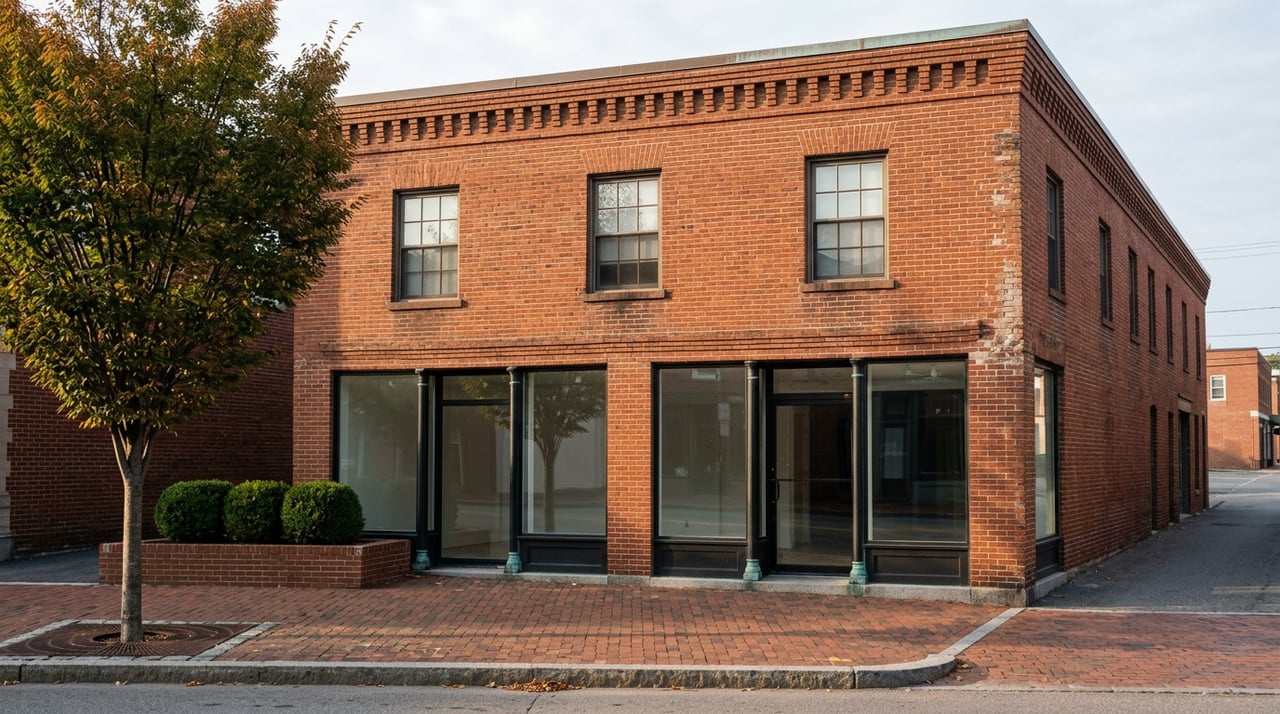
A five-minute walk from where Porchfest's kickoff party filled Waves Restaurant & Bar sits a much quieter experiment. Project: Pop-Up occupies two adjoining storefronts at 243 and 239 North Avenue, directly across from the train station, and it's been testing a different question all year: what happens when you make it nearly free to try opening a store.
The economics are the whole point. At 243 North Avenue, a 600-square-foot retail space that would normally rent for $3,000 or more a month goes for $100, the difference covered by American Rescue Plan Act funds the town allocated for economic development. Utilities and wifi are included. The first season, running October 2025 through January 2026, brought in three local brands: Wicks Please, Secret Stash Sweets, and Oolie Boolie Baubles. A later rotation brought in Cotton and Blue and Forager Fabrics.
Next door at 239 North Avenue, the arrangement runs longer and looks a little different. Creative Chaos Emporium, an arts and crafts thrift shop founded by Wakefield residents Sarah Lynne Reul and Stephanie Hannus along with Stoneham resident Janet Cohen, opened there on January 24 and has anchored the space since, at $100 a month against a market rate closer to $750. Rather than rotating out after a season, Creative Chaos Emporium has functioned as a host itself, carving out room inside its own storefront for shorter rotating brands like Candlelilla Co. That run at 239 North Avenue is scheduled to end at the close of September, this month.
What happens to a storefront like that once the subsidized window closes is the real question the program was built to answer, and there's a track record worth looking at. The pilot version of Project: Pop-Up launched back in 2021, drawing over 100 applications for roughly 15 spots. Of that original cohort, 94 percent kept growing through brick-and-mortar retail after their pop-up run ended, and 53 percent converted into permanent tenants on North Avenue rather than moving on or closing. That's not a marginal conversion rate for a program built around low commitment. More than half the businesses that took the cheap, short-term test ended up staying for good.
Both storefronts currently list as filled on the program's own site, with new applicants directed to a waitlist rather than an open slot, which tells you something about demand for the format even before this month's outcome is known.
Same Street, Same Logic, Different Timelines
Porchfest and Project: Pop-Up have nothing to do with each other organizationally. One is run by a volunteer committee and a brand new nonprofit built around live music. The other is a town-funded economic development program managed through a consultant called UpNext. But they're both running the same experiment, just on different clocks. Try something in public, at low cost, for a fixed window, and see what earns a permanent place afterward.
Porchfest's version of that test plays out over a single Saturday and gets measured in acts and host addresses. This year's numbers came in under 2025's peak, but the event spun off a nonprofit anyway, which is a stronger signal about staying power than attendance ever was. Project: Pop-Up's version plays out over months, not hours, and gets measured in whether a $100-a-month experiment turns into a business that can pay full rent. The 53 percent conversion rate from the pilot cohort suggests the format works more often than it doesn't.
North Avenue's older businesses give both experiments some context. Guillow's, the model airplane and balsa wood glider company, has been headquartered in Wakefield for 99 years, a reminder that the street has always had room for things that stay. McGuire + Co. Kitchen & Bath is relocating to a larger, upgraded showroom nearby, and Life Love Cheese recently opened offering grazing boards, sandwiches, and wine, both signs of a commercial strip that's still adding permanent tenants even as its incubator space cycles through temporary ones.
By the time Creative Chaos Emporium's run at 239 North Avenue closes out this month, Wakefield will have completed two separate tests of the same idea within a few blocks of each other. Whether the answer is a new nonprofit keeping porches full of music every August, or a thrift shop deciding whether North Avenue is where it belongs for good, the town has built more than one way of finding out.
If you're getting to know Wakefield and the towns around it, from Stoneham to Melrose to Winchester, Kim Covino & Co covers this whole North of Boston corridor and pays attention to the small, specific things that make each town what it is. Take a look at our North of Boston neighborhood guide for more, or reach out any time to request a complimentary home strategy conversation when the time comes.